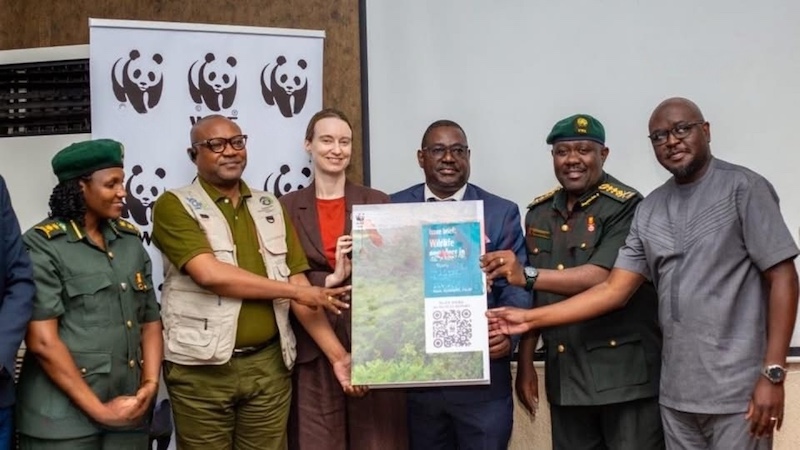
A new report launched in Kampala has raised concern over the declining population of lions in the Greater Virunga Landscape, warning that habitat destruction, shrinking wildlife corridors, and poaching are threatening one of East Africa’s most iconic predators.
The study, released by the World Wide Fund for Nature and launched by Tremayne Stanton-Kennedy, assessed 20 wildlife corridors stretching across Uganda, Rwanda, and the Democratic Republic of the Congo. Researchers found that increasing human activity and environmental degradation are cutting off vital migration routes used by lions and other wildlife species.
According to the report, lion populations are becoming increasingly concentrated in Queen Elizabeth National Park and Virunga National Park, leaving the species vulnerable to further population losses if conservation measures are not strengthened.
Conservation experts say the fragmentation of wildlife habitats has made it harder for lions to move freely between protected areas, reducing breeding opportunities and increasing conflict with nearby communities. Poaching, particularly through illegal snares set for other animals, has also continued to threaten lion survival across the region.
Also read: Climate Change Eating Up Queen Elizabeth National Park
The findings contrast sharply with the progress recorded among other wildlife species in the Greater Virunga ecosystem. The report noted that populations of elephants, chimpanzees, and mountain gorillas have shown encouraging growth due to stronger conservation programs, anti-poaching patrols, and cross-border cooperation among regional governments and conservation agencies.
Wildlife authorities and tourism stakeholders fear that continued lion decline could eventually affect tourism in the region, especially in safari destinations such as Queen Elizabeth National Park, which is famous for its tree-climbing lions and remains one of the top attractions for travelers seeking wildlife experiences and rental cars in Uganda for self-drive safaris.
Environmental groups are now calling for urgent action to restore wildlife corridors, strengthen anti-poaching enforcement, and promote community conservation initiatives aimed at reducing pressure on protected ecosystems.
The Greater Virunga Landscape is one of Africa’s most biodiverse regions, covering protected areas, forests, and savannahs shared by Uganda, Rwanda, and the Democratic Republic of the Congo. Conservationists warn that without coordinated regional intervention, lion populations could continue to decline despite broader wildlife recovery efforts in the region.