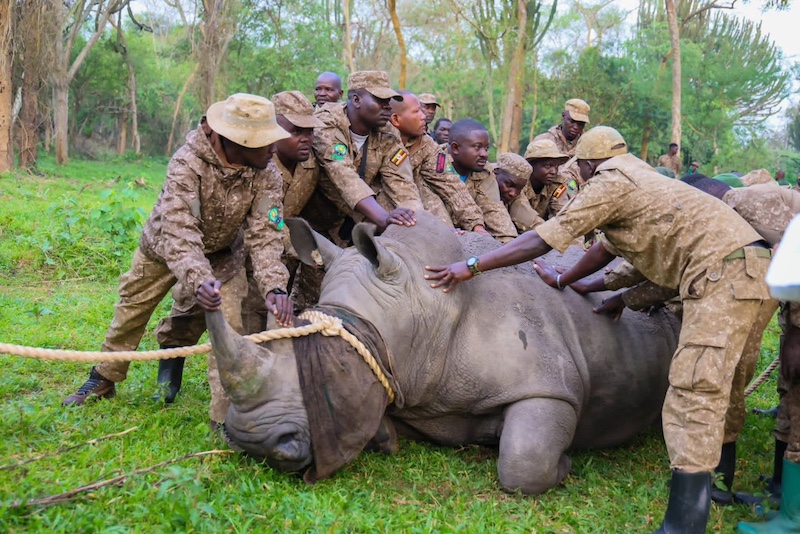
In a historic conservation breakthrough, the Uganda Wildlife Authority has officially commenced the long-awaited reintroduction of rhinos to Kidepo Valley National Park, restoring a species that has been absent from the park for over four decades. This milestone marks a new chapter in Uganda’s wildlife conservation story, signaling both ecological restoration and renewed ambition in protecting the country’s natural heritage.
The translocation exercise was flagged off by UWA Executive Director Dr. James Musinguzi, who emphasized the importance of this initiative in rebuilding Uganda’s once-thriving rhino population. The first phase involves relocating two southern white rhinos from Ziwa Rhino Sanctuary, with plans underway to introduce a total of eight rhinos into Kidepo through a carefully monitored, phased approach.
For decades, rhinos were part of Uganda’s rich biodiversity, roaming freely across several national parks. However, rampant poaching and years of political instability in the 1970s and 1980s led to their complete disappearance from the wild. Their return to Kidepo is therefore not just a conservation effort—it is a symbolic restoration of a lost legacy, representing hope for the recovery of endangered species across the country.
Kidepo Valley National Park, located in the remote northeastern corner of Uganda, provides an ideal environment for rhinos to thrive. Known for its sweeping savannahs, rugged landscapes, and relatively untouched ecosystem, the park offers the space and resources needed to support a growing rhino population. Conservation experts believe that the reintroduction will also help restore ecological balance, as rhinos play a crucial role in shaping vegetation and maintaining healthy grassland ecosystems as well as attract more tourists who engage in Uganda safaris to come to the park.
The relocation process itself is a complex and delicate operation that requires precision, expertise, and coordination among multiple teams. Wildlife veterinarians, rangers, and conservation specialists have worked tirelessly to ensure that the rhinos are safely transported and acclimatized to their new environment. From sedation and transport logistics to post-release monitoring, every step is carefully managed to minimize stress on the animals and maximize their chances of survival.
Security remains a top priority for UWA as the rhinos settle into their new home. The authority has strengthened anti-poaching measures within Kidepo, deploying well-trained ranger units and investing in modern surveillance technologies to protect the animals. Lessons learned from the successful conservation model at Ziwa Rhino Sanctuary are being applied to ensure that the reintroduced population is well-guarded against potential threats.
Beyond conservation, the return of rhinos to Kidepo is expected to significantly enhance Uganda’s tourism offering. The park, often described as one of Africa’s most pristine wilderness areas, has long attracted travelers seeking off-the-beaten-path safari experiences. With the addition of rhinos, Kidepo is poised to become even more appealing, offering visitors the chance to witness the “Big Five” in one destination.
For travelers planning to visit this remote park, Uganda car rental services are essential for navigating the long distances and rugged terrain associated with reaching Kidepo. The journey from Kampala to the park is an adventure in itself, taking visitors through diverse landscapes, traditional villages, and scenic countryside that showcase Uganda’s rich cultural and natural diversity.
The reintroduction initiative is also expected to bring tangible benefits to local communities living around Kidepo. Increased tourism activity often translates into job creation, improved infrastructure, and new business opportunities. UWA has emphasized the importance of community involvement, recognizing that local support is critical for the long-term success of conservation efforts. By engaging residents in wildlife protection and tourism activities, the authority aims to create a sense of ownership and shared responsibility.
In addition to economic benefits, the presence of rhinos is likely to inspire greater awareness about conservation among both locals and visitors. Educational programs and outreach initiatives are expected to play a key role in promoting the importance of protecting endangered species and preserving natural habitats for future generations.
The phased approach to reintroduction allows conservationists to closely monitor the rhinos as they adapt to their new surroundings. Each animal will be tracked using modern technology, enabling experts to study their behavior, movement patterns, and health. This data will inform future conservation strategies and help ensure the long-term sustainability of the population.
Kidepo’s unique location also adds to the significance of this initiative. Bordering South Sudan and Kenya, the park forms part of a larger transboundary ecosystem that supports diverse wildlife species. The reintroduction of rhinos could potentially contribute to regional conservation efforts, creating opportunities for cross-border collaboration and wildlife management.
For Uganda’s tourism industry, this development comes at a time when the country is actively promoting itself as a premier safari destination. The return of rhinos strengthens its competitive edge, offering visitors a more complete wildlife experience that rivals some of Africa’s most famous parks. It also reinforces Uganda’s reputation as the “Pearl of Africa,” a title that reflects its extraordinary natural beauty and biodiversity.
Travelers seeking a more immersive experience will find that Kidepo offers something truly special. Unlike more crowded parks, it provides a sense of solitude and authenticity that is increasingly rare in today’s tourism landscape. The opportunity to witness rhinos in such a setting adds a new layer of excitement, making every safari in the park a unique adventure.
A Uganda self drive safari to Kidepo is particularly appealing for independent travelers who value flexibility and exploration. Driving through the park allows visitors to set their own pace, discover hidden corners, and fully immerse themselves in the wilderness. With the return of rhinos, these journeys become even more rewarding, offering unforgettable encounters with one of Africa’s most iconic species.
As Uganda continues to rebuild its wildlife populations, the reintroduction of rhinos to Kidepo Valley National Park stands out as a defining achievement. It is a testament to the dedication of conservationists, the resilience of nature, and the power of collective effort in restoring what was once lost.
Looking ahead, UWA remains committed to expanding and sustaining the rhino population in Kidepo. Future phases of the project will involve additional translocations, ongoing monitoring, and continuous engagement with stakeholders to ensure success. The ultimate goal is to establish a stable, breeding population that can thrive independently in the wild.
The return of rhinos is not just about bringing back a species—it is about restoring balance, preserving heritage, and creating opportunities for future generations. It sends a powerful message that with determination, collaboration, and proper management, it is possible to reverse the damage of the past and build a more sustainable future.
For Uganda, this moment represents more than conservation success; it is a celebration of national pride and a reaffirmation of its commitment to protecting its natural treasures. As the rhinos begin their new chapter in Kidepo, they carry with them the hopes of a nation and the promise of a brighter future for wildlife conservation.