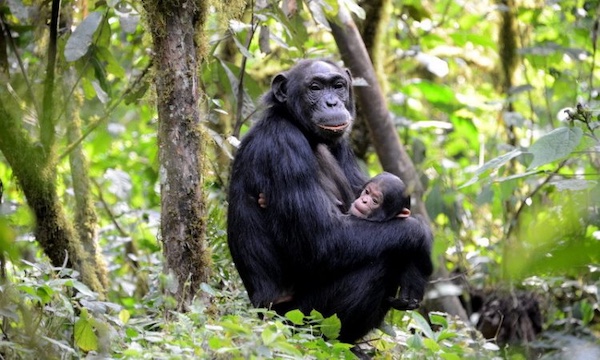
In a joint announcement made in partnership with the Jane Goodall Institute, the Uganda Wildlife Authority confirmed that the first-ever comprehensive chimpanzee census in Bwindi Impenetrable National Park has recorded an estimated population of 426 chimpanzees.
The findings are being described as a milestone for conservation planning in one of Africa’s most biologically diverse forests.
The census was conducted in two major sweeps between May and September 2025. Teams of researchers and trained field staff trekked through Bwindi’s thick forest terrain, using standardized survey methods to identify chimpanzee nests, vocalizations, and direct sightings. The exercise marked the first systematic, park-wide effort to determine the true size of the chimpanzee population in Bwindi.
For years, Bwindi has been globally recognized for its mountain gorillas, drawing thousands of visitors annually. However, conservationists have long emphasized that the park is also home to other important primate species, including chimpanzees whose numbers had not previously been established with precision.
Officials say the estimate of 426 chimpanzees now provides a reliable scientific baseline. This baseline will guide future conservation decisions, monitoring programs, and habitat protection strategies.
Speaking at the unveiling ceremony, representatives from the Uganda Wildlife Authority noted that understanding population size is essential for effective wildlife management. Without accurate data, it is difficult to measure growth trends, detect declines, or assess the impact of human activity and climate change.
The Jane Goodall Institute, known worldwide for its decades of chimpanzee research and advocacy, played a technical and advisory role throughout the census process. Conservation experts from the institute supported field methodology, training, and data analysis to ensure the results met international scientific standards.
The census teams faced challenging conditions in Bwindi’s rugged landscape. The park’s steep hills, dense vegetation, and unpredictable weather required months of coordinated effort. Survey teams navigated remote sections of forest, often hiking for hours to reach designated study zones.
Despite these challenges, officials described the exercise as a success, not only because of the final population figure, but also because it strengthened collaboration between conservation partners.
Chimpanzees are considered endangered due to habitat loss, disease, poaching, and human-wildlife conflict. In Uganda, forest fragmentation and pressure from surrounding communities remain key concerns. Although Bwindi is a protected area, conservation authorities say ongoing monitoring is necessary to safeguard its biodiversity.
The new population estimate will allow UWA to better assess whether current protection measures are sufficient. It will also support long-term research on chimpanzee behavior, movement patterns, and social structure within the park.
Conservationists emphasize that chimpanzees play a vital ecological role. As seed dispersers, they help maintain forest regeneration and biodiversity. Protecting them therefore supports the broader health of the entire ecosystem.
The census also highlights Uganda’s commitment to science-based conservation. By investing in systematic wildlife surveys, authorities are moving beyond assumptions and anecdotal reports toward measurable data that can inform national conservation strategies.
Bwindi Impenetrable National Park, a UNESCO World Heritage Site, covers more than 320 square kilometers of montane and lowland forest in southwestern Uganda. While its mountain gorilla population has been closely monitored for decades, this new chimpanzee census signals a more inclusive approach to wildlife management within the park.
Tourism stakeholders have welcomed the announcement, noting that reliable wildlife data strengthens Uganda’s reputation as a responsible conservation destination. Though chimpanzee trekking in Bwindi is not as established as gorilla trekking, the new findings could open discussions about future primate tourism management plans.
However, officials stress that conservation remains the primary goal. Any tourism expansion would need to be carefully controlled to ensure minimal disturbance to chimpanzee communities.
Looking ahead, UWA and the Jane Goodall Institute plan to use the 2025 census as a foundation for continued monitoring. Periodic follow-up surveys will help determine whether the population is stable, increasing, or facing new threats.
Environmental groups have praised the census as a model of partnership-driven conservation. By combining government leadership with international expertise, the initiative demonstrates how collaborative action can deliver credible results.
As Uganda continues to position itself as a leading conservation nation in East Africa, the 426 chimpanzees recorded in Bwindi represent more than a number. They symbolize the importance of data, cooperation, and long-term commitment to protecting the country’s natural heritage.
For conservationists on the ground, the census is not the end of the journey but the beginning of a more informed phase of protection. With a clear baseline now established, efforts to safeguard Bwindi’s chimpanzees can move forward with renewed focus and scientific confidence.